Some hospitals have built hyperbaric chambers in which patients breathe high-pressure air or oxygen. Hyperbaric therapy, often used when a patient's tissue or blood requires higher-than-normal concentrations of oxygen, is effective in treating carbon monoxide poisoning and breathing disorders, and is promising in combination with surgery. The use of decompression techniques is similar to that used in deep-sea diving.
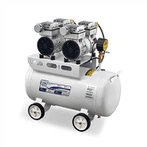
For inhalation therapy, clean, dry air is positively pressured by a few inches of water into the respirator in a non-pressurized therapy room. Hospitals are usually supplied with compressed air using oil-free compressors. In an alternative system that provides breathing air (convenient for patients in hospital or at home), oxygen-rich air is passed through a molecular sieve filter to remove nitrogen from the atmosphere. Through this oxygen concentration process, the oxygen concentration can be to 90% to 95%.
The high-speed turbine-driven pneumatic surgical drill has exciting capabilities. In cranial surgery, it reduces the time it takes for a surgeon to remove the skull to take as little as two minutes, compared to half an hour with hand tools. It can also be used to cut through grafted thoracic cartilage to create artificial ears, and to shape grafted bone to recreate a badly damaged nose. Pneumatic drills are lightweight yet increase the speed and power of bone cutting, drilling and shaping. Powered compressed air or nitrogen is exhausted at the tip of the drill to cool the cutting area.
Devices that control air conditioning and humidity in hospital operating rooms are powered by compressed air. Nurses use compressed air to clean urinary and other catheters and to spray medicines. Vacuum is used to remove blood and secretions from the procedure when neither inlays nor sponges provide a clean operating environment for the surgeon. The operating room is pressurized to remove dust. The pneumatic doors of the operating room are operated by foot pedals. Hospital laboratories, laundry rooms, and other maintenance departments also use compressed air in many ways.