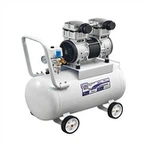
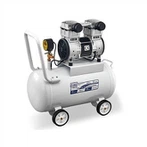
In our daily life, we are exposed to sound volume are generally controlled between 20 db ~ 60 db. While air compressors have a sound level range of 40-92 decibels, any noise above 85 decibels is considered harmful. This means that reducing the sound emitted by screw air compressors and compressed air systems will not only make the workplace more pleasant, but also healthier and safer for workers!
Not only do screw air compressors power important manufacturing components and applications, but the heat generated during compression can also be used, such as waste heat recovery, for domestic water, bathing and showering. There is another form of energy that is also the result of the air compression process - sound.
The sound and volume we hear depends on the proximity to the source, as well as other variables in a given environment. When indoors, these variables can include the size of the room, the things in the room, and the ability of various surfaces in the room to absorb or reflect sound. When sound waves come in contact with a surface, a portion of the sound is absorbed by that surface and another portion is reflected back. How well a surface absorbs sound depends on its material - think, for example, of how different a room with carpet sounds from a room with tile or hardwood floors!
So how do you reduce the noise level of a compressor installation? The size of the compressor room, the location of the compressor in the room, and the materials associated with the compressor are all important variables in generating (and reducing) compressor noise. These are four effective ways to reduce noise and make the workplace safer and more enjoyable.
First, soundproofing. This involves placing a sound barrier between the sound source and the receiver. This means that only part of the sound can be isolated, depending on the barrier and its respective characteristics. Larger, heavier barriers are obviously more effective than smaller ones.
Second, sound absorption. By installing porous absorbers (attached to the barrier) around the sound source, the level of noise reduction is increased on top of that provided by insulation alone; consider open-cell polyurethane foam or heavier fabric applications.
Third, vibration isolation. By preventing vibration transfer from one part of the structure to another, you can also reduce sound levels by association. A common area of vibration transfer is large machinery through the floor. Steel springs, cork, plastic and rubber are all effective ways to reduce this transfer and any associated noise. The choice of material depends on the size of the machine and the surrounding space, as well as the stability requirements of the machine.
Fourth, vibration damping. Installing an external damping surface made of elastic material on the structure is an effective way to reduce machine vibration (and sound). The larger the damping barrier, the more effective its means of reducing vibration. This may prove to be a cost effective solution.
DAERTUO AIR COMPRESSOR Business
products cover seven industrial gas applications, including centrifugal compressors, dental air compressors, oil-free air compressors, mobile air compressors, reciprocating compressors, industrial vacuum pumps, and air source heat pumps.
mobile compressors, reciprocating compressors, industrial vacuum pumps, pneumatic tools and other applications
Upholding the positioning of high-end - energy-saving - direct sales products and services
Integrating R&D, manufacturing, direct sales and service