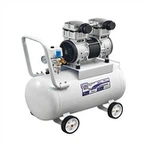
Pressure vessel characteristics
1 Harsh working conditions
Mainly in the load, temperature and medium three aspects
① load. Out of the static load, but also subject to low circumference fatigue load.
② ambient temperature. Work at high temperatures, and sometimes at low temperatures.
③ medium. There are air, water vapor, hydrogen sulfide, liquefied petroleum gas, liquid ammonia, liquid chlorine, various acids and alkalis.
2 Accidents are likely to happen
① Compared with other equipment, it is easy to overload operation. The pressure in the vessel will rise rapidly due to operation error or abnormal reaction. Often, the vessel is damaged before it is discovered.
②The local area is complicated by the force. Such as around the vessel openings and other structural discontinuities, often due to excessive local stress and repeated pressurization, depressurization and damage accidents.
③Hide the defects that are difficult to find. For example, the tiny cracks left in the manufacturing process are not discovered, and the cracks are going to expand in the process of use, or the damage occurs suddenly under the right conditions (using temperature, working medium, etc.).
④ The use conditions are harsh.
3 widely used and require continuous use
Pressure vessels generally require continuous operation, it can not be like other equipment can be stopped at any time for maintenance. If suddenly stop running, wine will give a production line, a factory, or even a region of production and life caused great impact, indirect and direct economic losses are also very large.
The composition of the pressure vessel
The composition of the pressure vessel in many forms, the most common structure of cylindrical, spherical and conical three. The higher the working pressure of the pressure vessel, the thicker the wall of the cylinder should be. Now the most common cylindrical pressure vessel as a representative of the description. This type of vessel is mainly composed of cylinder, head, flange, sealing elements, openings and receiver, support, etc.
1 cylinder
Cylinder is one of the main components of the pressure vessel. Most of the pressure space needed to store materials or complete chemical reactions is completed by it, so the size of the cylinder is often determined according to the process requirements. The shapes are cylindrical, conical and spherical etc.
2 Head
According to different geometrical shapes, heads can be divided into several shapes such as spherical heads, ellipsoidal heads, disc-shaped heads and flat cap heads. In the pressure vessel, when the head is connected with the cylinder, only spherical or ellipsoidal head can be used, and flat cap head is not allowed to be used.
3 Flange
Flange is an important part in the connection of vessel and pipeline, its function is to connect with bolts and ensure the sealing by pressing the gasket by screwing bolts.
4 Sealing element
The sealing element is placed between the two flanges or heads and the end contact surface of the cylinder, which is pressed with the help of bolts and other connecting parts so that the liquid or gas medium inside the cylinder does not leak. The sealing element is selected according to the working pressure, medium and temperature of the vessel. Sealing elements are metal (copper, aluminum, soft steel) sealing elements, non-metallic (asbestos, rubber, etc.) sealing elements and combined sealing elements (iron wrapped asbestos, steel wire wrapped asbestos, etc.).
5 openings and receiver
Due to the process and maintenance needs, the cylinder or head of the vessel to open a variety or installation of receiver, such as manholes, sight glass holes, material import and export holes, as well as the installation of pressure gauges, liquid level meters flow meters, thermocouples, safety valves and other receiver openings.
6 support seat
Support is to support the pressure vessel and fixed on the basis of the pressurized components. Support is based on the form of installation of the vessel to decide. Common forms of support are saddle type, support type, suspension type, skirt type, etc., spherical vessels often use column and skirt type two kinds of support.