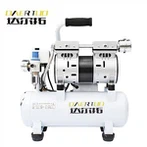
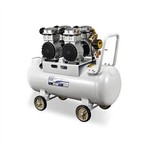
I don't know if you have the misconception that an air compressor is a compressor. Actually, not. There is still a big difference between the two. Some summary comparison between the two (including manufacturing companies) Air compressor and compressor are two different mechanical products.
Process compressors can compress various gas media, such as hydrogen, nitrogen, chlorine, oxygen, etc., used in the air separation industry to produce nitrogen and oxygen. Air compressors are mainly for compressing air and are used in many industries besides chemical industry.
Many companies do air compressors, but not many companies that do process compressors. Process compressor companies are generally able to produce units for different compression processes.
The difference between the two concepts
An air compressor is an air compressor. It is mainly a mechanical product used to compress air in many places. For example, one of the most common functions of an air compressor is to compress air for power, which is widely used in the power industry. In addition, we can use them for refrigeration, gas separation, transportation, etc. They play a very important role in life and work.
The compressor is the general name. And there are many kinds of compressors, such as refrigerant compressors, hydrogen compressors and air compressors, etc. Air compressor is only one kind of compressor, their compression medium is air, and we can use the compressor to compress many things, not only air. Therefore, the distinction between the air compressor and compressor is like Chinese and humans. The Chinese are included in the category of human beings, and the air compressor is included in the general concept of a compressor, one of the compressors.
People generally think that an air pump is an air compressor. But the air pump is a piston air compressor, as it was said long ago. Now there are more kinds of air compressors, screw machines, oil-free machines, energy-saving inverter air compressors and so on. The principle of air pump and air compressor is still different.
The working principle of air compressor
Let's take the screw air compressor as an example. The working cycle of a screw compressor can be divided into three processes: air intake (1), compression (2, 3) and exhaust (4). Each pair of mutually meshed teeth completes the same work cycle as the rotor rotates.
1. inlet process: rotor rotation, yin and yang rotor teeth groove space in turn to the inlet end wall opening, its space is the largest, at this time the rotor teeth groove space and the inlet port of the connected, because in the exhaust of the teeth groove gas is completely exhausted, exhaust completed, the teeth groove in a vacuum, when the turn to the inlet port, the outside gas is sucked, along the axial into the yin and yang rotor teeth groove. When the gas is filled with the entire groove, the rotor inlet side end face is turned away from the housing inlet, and the gas in the groove is closed.
2. compression process: the yin and Yang rotor at the end of suction, its yin and Yang rotor tooth tip will be closed with the housing, and the gas in the tooth groove is no longer flowing out. The meshing surface gradually moves to the exhaust end. The space of the tooth groove between the meshing surface and the exhaust port is gradually smaller, the gas in the tooth groove is compressed, and the pressure is increased.
3. exhaust process: when the rotor's meshing surface turns to the exhaust port with the housing, the compressed gas begins to discharge until the tooth tip, and the tooth groove of the meshing surface move to the exhaust surface. The yin and yang rotor meshing surface and the housing exhaust port tooth groove space are 0. That is, to complete the exhaust process, at the same time, the rotor's meshing surface and the housing air inlet between the tooth groove length and reach the longest, the air inlet process again.
The working principle of the process compressor
We take the common centrifugal compressor as an example. The turbine (or motor) drives the compressor spindle impeller rotation. Under the action of centrifugal force, the gas is thrown to the work wheel behind the diffuser to go. And a thin zone is formed in the middle of the working wheel, and the gas in front enters the impeller from the inlet part in the middle. As the working wheel keeps rotating, the gas can be continuously thrown out, thus maintaining the continuous flow of gas in the gas compressor. The gas increases the pressure due to the centrifugal effect and can also leave the working wheel at a great speed. The gas gradually decreases its speed by the diffuser, and the kinetic energy is transformed into static pressure energy, which further increases the pressure. Suppose the pressure obtained by one working impeller is not enough. In that case, we can achieve the outlet pressure requirement by making multiple impellers work in series. The series connection between the stages is achieved using a bent pass, a backflow device. This is the working principle of a centrifugal compressor.