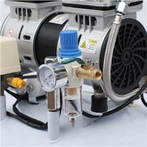
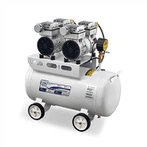
The main uses of piston compressors (according to the use of compressed gas) are as follows:
(1) Provide a medium for transmitting energy
The air source is easy and sufficient, and the use of compressed air as a medium for transmitting energy has the advantage of safety, so it has become more and more common to use compressed air to drive various tools and machinery. For example, using compressed air to drive pneumatic picks, pneumatic drills, pneumatic wrenches, molding machines, vehicle braking, opening and closing doors and windows, as well as control instruments, automation devices, etc. In addition, the use of compressed air to blow the weft in the air-jet loom to replace the shuttle, medium and large engine starting, slurry mixing, oil well fracturing, high-pressure air blasting coal mining, torpedo launching, submarine floating and sinking, etc., all require compressed air of different pressures.
(2) Liquefy the gas
Gases can be liquefied by compression, cooling and expansion. The evaporation of liquefied gas can be used for artificial refrigeration. After the mixed gas is liquefied, the different boiling points of its components can be used to gradually evaporate and separate from each other, such as separating air to obtain oxygen and nitrogen. In addition, liquefied gas has the advantage of being convenient for storage and transportation.
(3) Compressed gas for synthesis
In the chemical industry, the raw material gas for synthesis is often compressed to high pressure to facilitate the synthesis reaction. For example, nitrogen and hydrogen synthesize ammonia, carbon dioxide and hydrogen synthesize methanol, ammonia and carbon dioxide synthesize urea, etc. In addition, high pressure polyethylene is also polymerized under high pressure.
(4) conveying gas
There are two ways of gas transportation: pipeline transportation and bottled transportation. When the amount of gas is large, it is transported by pipeline, and when the amount of gas is small, it is bottled. In pipeline transportation, the purpose of compressing gas is to transport more gas with a smaller diameter and to overcome the resistance of the pipeline during the flow. When bottling and transporting, compressed gas allows a limited volume to hold a higher mass of gas.